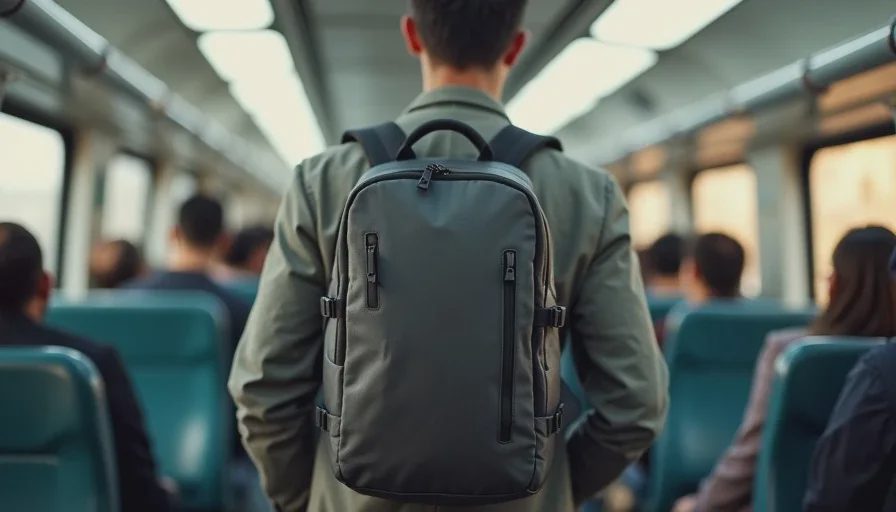
Here's the short answer: one 26–35L bag with a separate shoe compartment and a wet/dry zone, a pair of packable trainers, a flat-lay tech pouch, a waterproof toiletry kit, a compact microfiber towel, a roll-top dry bag for sweaty clothes, and a reusable grocery tote that folds to the size of a wallet. Total added weight: about 3 pounds. Total time to pack in the morning: five minutes.
Now let me explain the setup, because the bag is the easy part. The system is what makes it work.
Why the Three-Stop Day Breaks Most People's Bags
Most people carry one bag for work and then add a second for the gym. Or they cram everything into one bag and discover that their laptop is damp because it sat next to a wet towel. Or they leave the gym bag at home because it's annoying to carry two bags on the train.
The three-stop day—office, gym, grocery—has a specific set of problems:
Problem one: separation. Sweaty clothes and a work shirt cannot share airspace. Wet shoes and a laptop cannot touch. You need barriers, not just compartments.
Problem two: volume. You're carrying work gear plus gym gear plus whatever you buy at the grocery store. The bag needs to expand when you buy groceries and compress when you don't.
Problem three: weight distribution. A single-shoulder duffel throws off your posture on a crowded train. A backpack distributes the load and keeps your hands free.
Problem four: time. You're not going home between stops. You need to change at the gym, put your work clothes back in the bag without getting them sweaty, and carry groceries home. Every transition has to take less than five minutes.
The right setup solves all four. Here's what it looks like.
The Bag
The sweet spot is 25–35 liters with dedicated compartments for shoes, wet items, and a laptop.
There are three bags I recommend for this specific use case, and they're all different.
The Bellroy Transit Workpack (26L, $199). This is the bag I'd buy if I were buying one today. It has a full-zip clamshell opening that lays flat like a suitcase. The laptop compartment sits in its own padded section against the back panel, fitting screens up to 16 inches. There's an internal pouch next to the laptop for chargers and cables. The water bottle pocket is external and accessible without removing the pack. The main compartment has enough room for a change of clothes, shoes, and a small toiletry kit.
What makes it work for the three-stop day: the clamshell opening means you can access your gym clothes without unpacking your work gear. You unzip the front panel, the bag lays flat, and everything is visible. No digging. No pulling out your laptop to find a shirt.
The Aer Duffel Pack 3 (35L, $195). A 35-liter hybrid with a separate shoe compartment, waterproof base, and laptop sleeve. It converts from duffel to backpack for hands-free commuting. The extra volume is useful if you're carrying more gym gear or picking up groceries on the way home.
The Osprey Nebula 32 (32L, $130). A lighter, more affordable option. It has a 16-inch laptop sleeve, a TSA clamshell design, and enough volume for gym clothes and a change of outfit. It's not as refined as the Bellroy, but it's $70 cheaper and it's built for daily abuse.
What to look for in any of these: A separate shoe compartment (or a shoe bag). A wet/dry zone for sweaty clothes. A clamshell or wide opening for easy access. A water bottle pocket you can reach without taking the bag off.
The Shoes
This is the part most people get wrong. You're not carrying your gym shoes in the main compartment. You're carrying them in a shoe bag or a dedicated shoe compartment, separated from everything else.
But the shoes themselves should be packable. You want something light, flat, and flexible enough to roll into a small space.
The best options for a commuter who needs packable gym shoes:
Strike Movement Haze Trainers. Lightweight, pack well, and designed for functional training. Multiple users on commuter forums recommend them specifically for their packability.
TYR CXT-2. One user called it “by far the best gym shoe I've ever owned.” It's a training shoe with a stable platform for lifting and enough flexibility for short runs.
New Balance Minimus TR BOA V2 ($150). A minimalist training shoe that's “travel friendly and easily packable.” The BOA lacing system means no laces to tangle in your bag.
Any barefoot shoe. If you're doing bodyweight work or light lifting, barefoot shoes pack flat and weigh almost nothing.
What not to pack: Running shoes with thick foam midsoles. They're bulky and they don't compress. If you need running shoes specifically, wear them on gym days and pack your work shoes instead.
The trick: Keep a pair of gym shoes permanently in your bag. Don't borrow from your closet every time. A dedicated pair lives in the shoe compartment, and you restock the bag—not the shoes—when you get home.
The Wet/Dry System
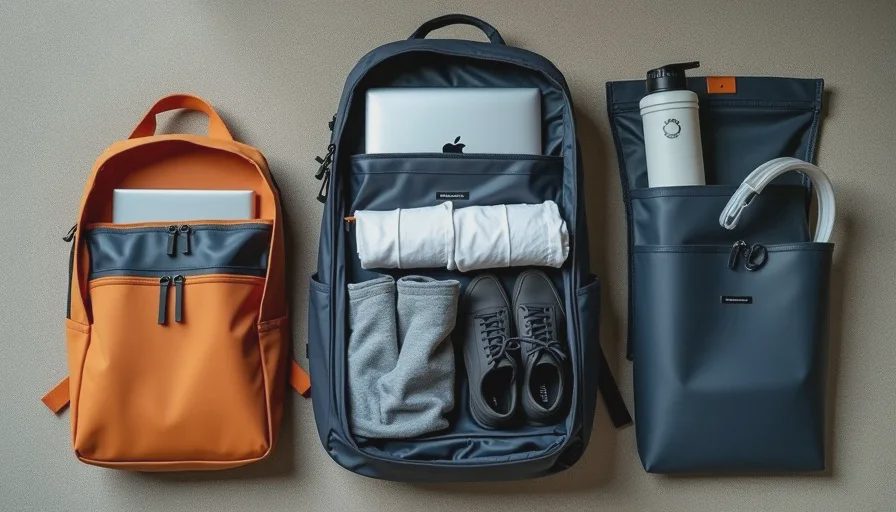
This is the difference between a bag that works and a bag that smells like a locker room.
A roll-top dry bag for sweaty clothes. A compact dry bag—about 5 liters—weighs almost nothing and seals completely. The second you finish your workout, your sweaty shirt, shorts, and socks go into the dry bag. Seal it. Put it in the main compartment. Nothing else touches it.
A waterproof toiletry kit. Not a Dopp kit with a zipper—a welded-seam or roll-top kit that won't leak. The Matador FlatPak Toiletry Case ($30) is a good option: waterproof welded construction, internal mesh pockets, a hanging hook, and it packs flat when empty.
Solid toiletries over liquids. A bar of soap in a travel case weighs less than a bottle of body wash and won't explode in your bag. Same with solid deodorant versus spray.
A microfiber towel. It dries in minutes, weighs almost nothing, and packs flat. A full-size cotton towel stays damp for hours and takes up half your bag.
The separation rule: Wet gear goes in the dry bag. Shoes go in the shoe compartment. Clean clothes stay in the main compartment. Nothing crosses zones. Not once.
The Tech Pouch
You already have a tech pouch from your office EDC. It comes with you. The only thing that changes on a gym day is that you don't take it out at the gym—it stays in the bag, zipped, with your laptop.
The Peak Design Tech Pouch ($59)** or the **Bellroy Tech Kit ($55) both work. Seven compartments, elastic loops for cables, a clamshell opening that lays flat.
If you want to know what goes in it, I wrote about that in the tech pouch article. The short version: one charger, one battery, two cables, a mouse, a cloth, and a USB-A adapter. That's the whole pouch.
The Grocery Stop
This is the part nobody plans for, and it's the reason your bag needs to expand.
A reusable grocery tote that folds flat. The kind that stuffs into its own pocket and clips to a bag strap. It weighs about 2 ounces. When you stop at the grocery store on the way home, you pull it out, fill it, and carry it separately or clip it to your bag.
Why not put groceries inside the backpack? Because your gym clothes are in there. Your shoes are in there. Your laptop is in there. You don't want a carton of eggs on top of your work shirt.
The grocery tote is the answer. It's one more item, but it's two ounces, and it solves the problem completely.
If you drive to work instead of taking the train: The grocery tote stays in your trunk organizer. A collapsible trunk organizer—like the FORTEM or Drive Auto Products models, both under $30—keeps your gym bag, grocery totes, and emergency supplies separate and secure. The non-slip bottom keeps everything in place during stops and turns.
The Packing Order
Here's how I pack the bag, in order, from back to front:
1. Laptop in the padded sleeve against your back. Weight closest to your spine means better posture on a crowded train.
2. Tech pouch in the internal pocket next to the laptop. Chargers, cables, mouse. Everything you need for work.
3. Clean clothes in the main compartment, rolled, not folded. Rolling keeps clothes wrinkle-free and maximizes space. A clean shirt, clean socks, clean underwear. If you're going to the gym after work, your work clothes become the clean clothes you change back into after your workout.
4. Shoes in the shoe compartment. Or in a shoe bag at the bottom of the main compartment.
5. Dry bag with gym clothes, rolled. This goes on top of the clean clothes. It's the last thing you need in the morning and the first thing you pull out at the gym.
6. Toiletry kit in the internal zippered pocket. Deodorant, face wipes, soap. Accessible without unpacking the bag.
7. Water bottle in the external pocket.
8. Grocery tote clipped to the outside.
That's the whole bag. It weighs about 6–7 pounds with a laptop, plus whatever the gym clothes and shoes add.
What I Don't Recommend
A second bag for the gym. You won't carry it. Or you'll leave it at home. Or you'll forget it on the train. One bag, one system.
A duffel without backpack straps. A single-shoulder bag throws off your posture on a commute, especially if you're walking or biking. Backpack straps or a convertible design.
Putting sweaty clothes directly in the main compartment. Even for one trip. The moisture will find your laptop. Use the dry bag.
Cotton gym clothes. They stay damp, they smell, and they're heavier than synthetic fabrics. Quick-dry fabrics are the right choice.
A full-size towel. It won't dry in your bag. You'll put it back in wet the next day. Microfiber or nothing.
A toiletry kit with a zipper. Zippers leak. Welded seams or roll-top closures.
Buying a bag bigger than 35 liters. You'll fill it with things you don't need. The 26–32L range is the sweet spot for a commuter who carries work gear, gym gear, and a change of clothes.
No letters yet — be the first guest to write.